The future of work: Something AI can’t predict (but you can create)

Picture this: by the time you pour your morning cup of coffee and settle into your workday, AI systems have already analyzed global market trends and generated strategic recommendations tailored to you.
Rather than having a personal assistant comb through emails, you receive an automated summary of messages received since you were last online, provided in order of urgency. A reminder for your first meeting pops up on your screen, along with the agenda, outstanding action items, and key decisions to be made.
No, you’re not dreaming—this scenario is possible due to recent AI advancements. However, this new reality has sparked concerns among employees regarding job displacement and knowledge workers being rendered obsolete. As a leader, it’s your responsibility to understand—and share—one important distinction:
AI isn’t coming for our jobs—it’s coming to our jobs.
Much like how the introduction of computers and the internet revolutionized jobs in the past, some work will go away, some will be augmented, and types of work we never even considered will emerge. The International Monetary Fund (IMF) reports that 60% of jobs are likely to be affected by AI, meaning every senior leader plays a role in evolving the workforce.
But shaping the future of work is a tall task for any leader. And as much as you might want to buy the workplace of the future by investing in a new tool or off-the-shelf training (or, better yet, ask generative AI to create it for you), it needs to be cultivated by prioritizing skill development, building innovative talent strategies, and demonstrating courageous leadership.
Cultivate organizational adaptability
In our recent survey of C-suite executives, the more “human skills” of creativity and critical thinking ranked higher than technical skills for the AI-driven workforce. And with the growing accessibility of AI tools and products, more nontechnical workers are leveraging AI, leading to the emergence of what we call "citizen developers.” Even without a formal engineering background, these citizen developers can use AI tools to assist in software development and other complex activities.
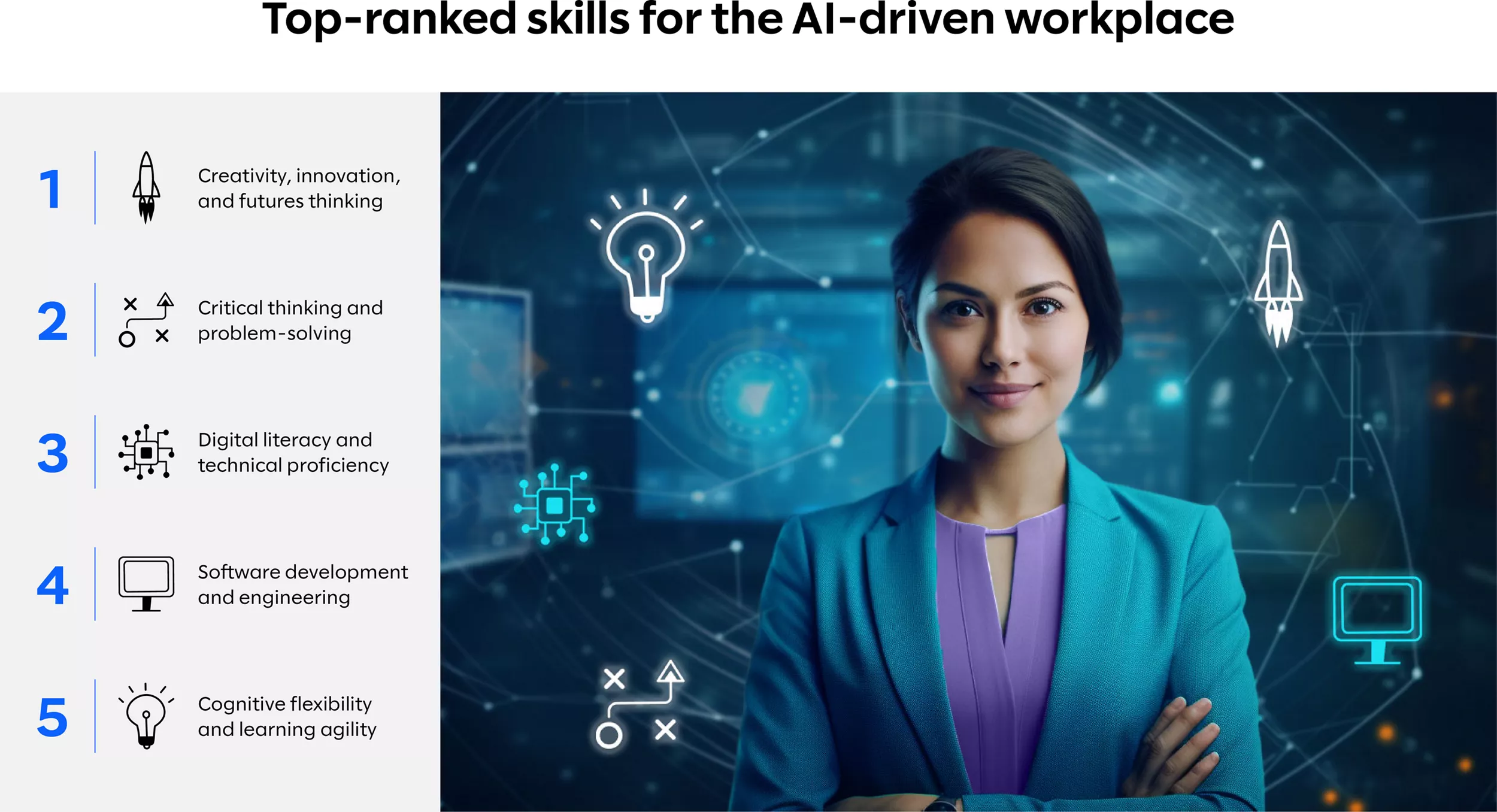
So with AI at our fingertips, how do you empower teams to leverage their human skill sets while embracing this new technology? In our work equipping hundreds of organizations with AI, it all comes down to adaptability.
Thriving organizations will need a workforce that acts with curiosity, embraces new experiences, and fosters a culture of experimentation. This ability to effortlessly adapt to new technologies directly influences your customers and business performance.
While the metrics of intelligence quotient (IQ) and emotional quotient (EQ) are often used to gauge individual and team abilities, we use the adaptability quotient (AQ) to measure the ability to adapt. One way to do so is with Slalom’s “SHIFT” model—a lens to help focus, evaluate, and improve adaptability.
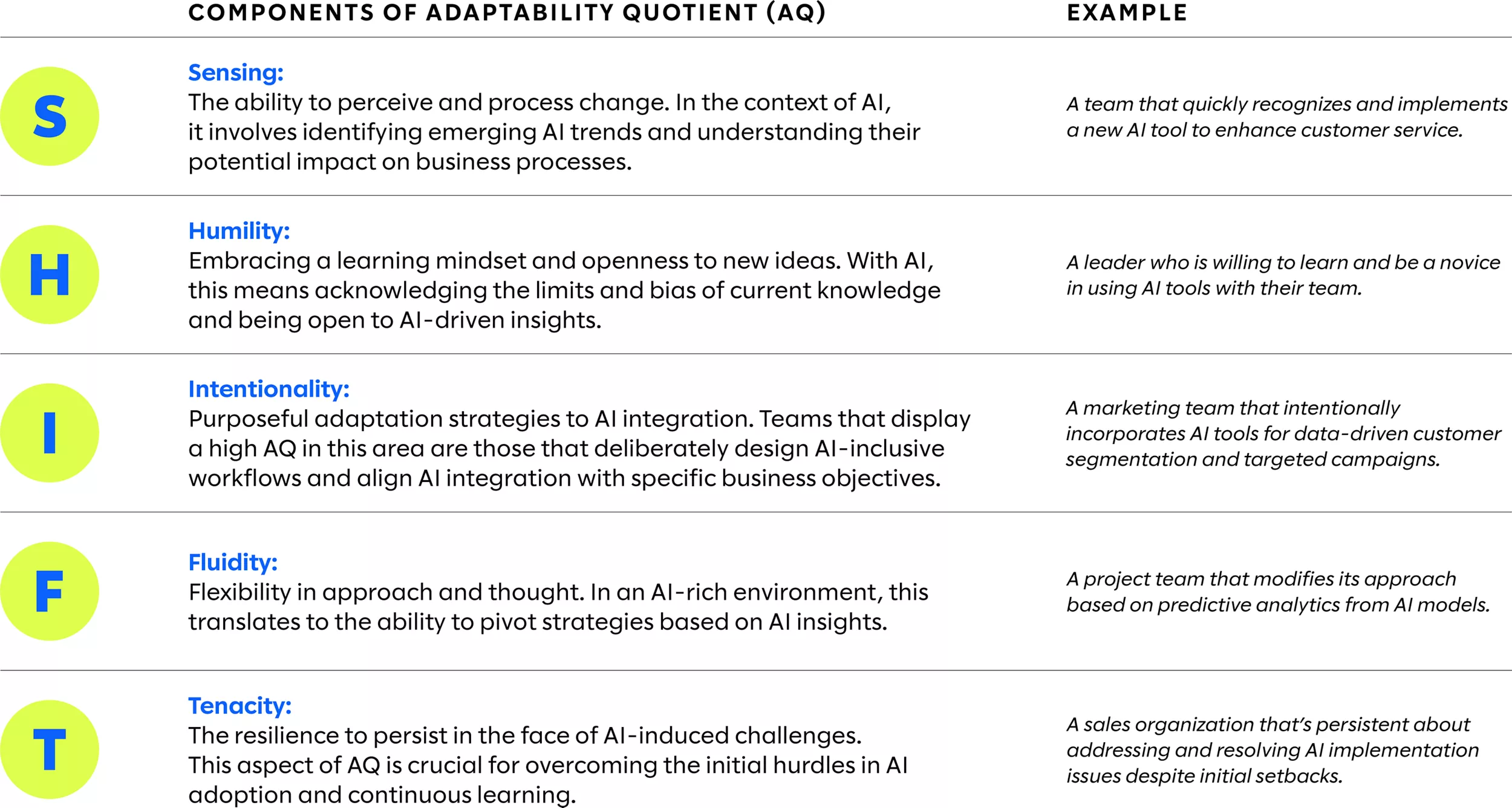
As technology continues to evolve, you need to move your attention from traditional development to fostering adaptability in your people and teams. The SHIFT view can help you identify the behaviors you need to encourage in your teams and address any gaps.
Rethink your talent strategy
It’s not enough to pinpoint the skills required for the future of work—you also need to create the environment for these skills to grow and thrive. Our survey found that 41% of US executives see a lack of skilled personnel as a major hurdle in their AI transformations. It’s time to rethink how your talent development strategies equip your teams to learn new skills and tools.
This evolution starts with:
Reconsidering your hiring focus.
How are you hiring for adaptability? Do you have the tools and processes in place to recruit and hire for human skills such as critical thinking, scenario planning, and collaboration? Consider challenging historical norms such as degree requirements. As AI and learning opportunities expand, people are acquiring skills in novel ways, requiring a broader search for talent in unexpected places. And this shift in hiring focus goes both ways, with job seekers prioritizing positions that offer access to these new technologies.Creating a culture of learning in your organization.
If you wait for formalized AI learning programs, you’ll quickly fall behind. Adopt a continuous learning approach that integrates external education, technical certifications, on-the-job training, and formal in-house learning while encouraging employees to regularly engage and experiment.Focused AI tool use.
Determining the perfect human-AI pairings—as well as where people and machines work best on their own—can be daunting. Start by examining the daily tasks of your employees to determine the potential for AI augmentation, then prioritize tasks that can be automated and add value in your planning.

A global CPG organization wanted to enable AI within their teams to improve their workflows but wasn’t sure which changes would provide the most value. Using Slalom’s EnhanceIQ methodology, we assessed 20+ departments, 500+ roles, and 10,000+ tasks to determine which tasks should be automated, augmented, or substituted. The company now has a customized AI roadmap that provides clear prioritization of which tasks should be automated and clarity on how their employees’ roles will evolve in the future.
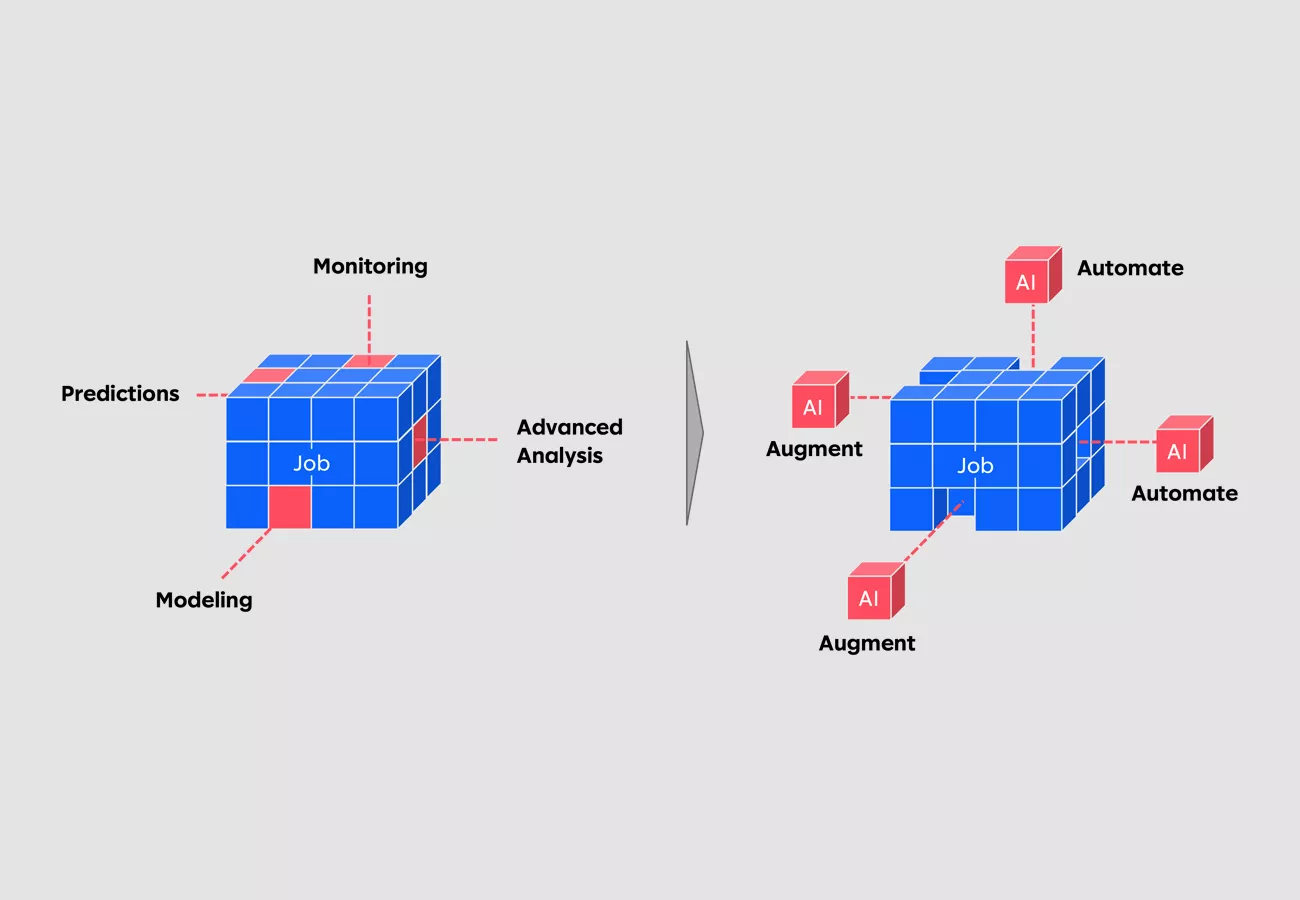
A global CPG organization wanted to enable AI within their teams to improve their workflows but wasn’t sure which changes would provide the most value. Using Slalom’s EnhanceIQ methodology, we assessed 20+ departments, 500+ roles, and 10,000+ tasks to determine which tasks should be automated or augmented. The company now has a customized AI roadmap that provides clear prioritization and clarity on how their employees’ roles will evolve in the future.
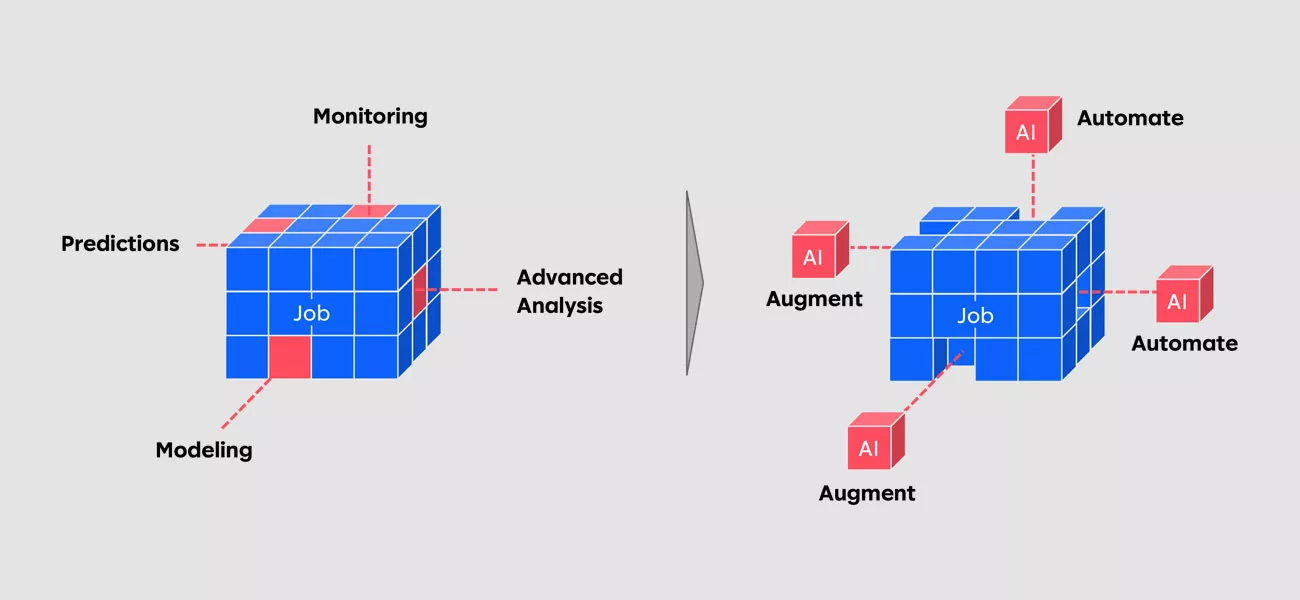
An AI-powered workforce requires an environment that prioritizes adaptable skills, enables flexible and efficient learning, and optimizes AI tool use while allowing employees the space to test, learn, and iterate. Creating the culture and psychological safety for this level of employee-driven experimentation starts with one group: leadership.
Lead by example
The cringeworthy refrain “That’s not how we do things here” is especially troubling when it comes to AI. Companies might have been able to drag their feet around investments such as cloud migration in the past, but AI has permeated every part of the workplace, calling for a reinvention of leadership behaviors.
In practical terms, you must become a business technologist. These hybrid leaders embrace the role of AI, are curious and excited about emerging technologies, and can see how combining business acumen with these new tools will differentiate their organization.
This shift requires a vulnerability if you don’t consider yourself a technologist. Start by being transparent about your own AI skill evolution. Create open learning sessions for teams to connect and grow together. Struggling with engineering prompts to get the output you envision? Share where you went wrong and ask for help. Curious about the different tools on the market? Explore free trials and test alongside your employees. As you begin to see productivity gains through using new tools, apply that time toward keeping updated on the latest AI advancements.
By immersing yourself, you can develop your skills faster and establish the culture of learning and adaptability you’ll need to guide others in an AI-driven world.
A stronger workforce and better outcomes
We all share basic business aspirations: strong returns, consistent growth, and happy customers. Achieving these outcomes starts with your people—from the skills you cultivate to the learning environment you create—and the example leadership sets.
As companies navigate this shift, the focus needs to be on fostering adaptability, updating your talent strategy, and revisiting how your leadership approaches AI. Thriving organizations are thinking beyond keeping pace with technological advances to embrace a future where AI and humans collaborate to better serve customers and differentiate their organizations.
A future where humans aren’t replaced by AI, but overflowing inboxes and redundant meetings are replaced by more time to be strategic and enjoy that first cup of coffee.
This article was written by Slalom in support of our partnership with Fortune. Visit the Slalom-sponsored AI hub spotlighting the companies using AI to change the world for the better and exploring how technology and innovation can address society’s biggest challenge.